 Image 1 of 1
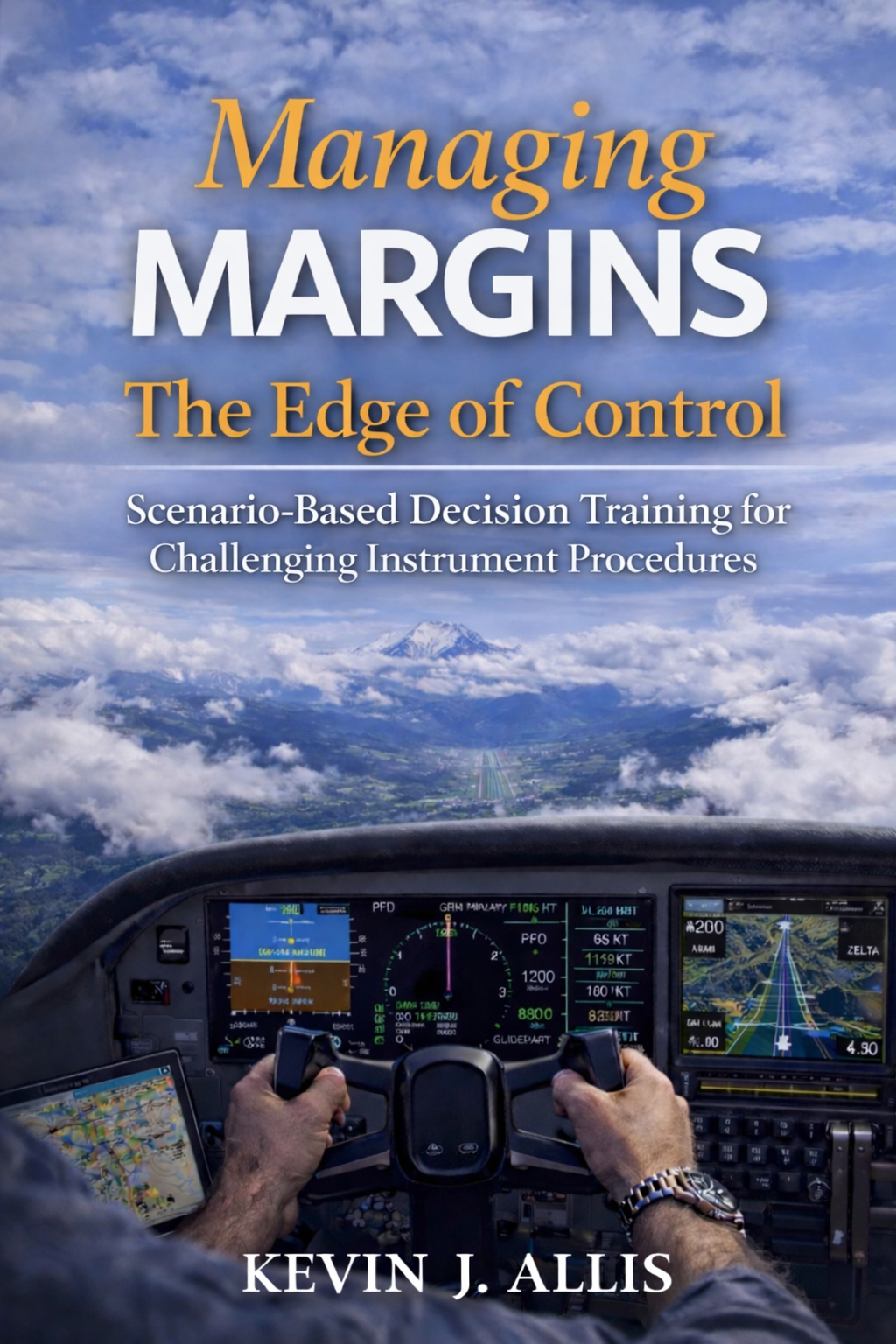
Managing Margins: The Edge of Control is designed as a scenario-based training framework that shifts pilot education away from reactive skill execution toward proactive judgment and margin management, using realistic—but deliberately simplified—instrument flight scenarios to expose how safety margins erode long before a situation becomes unrecoverable. Rather than focusing on extreme failures, the book emphasizes that most hazardous situations develop gradually in otherwise flyable aircraft, where the decisive factor is not technical capability but the timing and quality of pilot decisions; through structured scenarios, it trains pilots to recognize early warning cues, establish personal minimums, and act while options remain abundant. The overarching goal is to cultivate disciplined aeronautical decision-making—teaching pilots to intervene at the “edge of control” before performance, weather, or human factors converge—so that professionalism is defined not by last-second recovery, but by the consistent ability to anticipate, manage, and preserve operational margins.
Managing Margins: The Edge of Control is designed as a scenario-based training framework that shifts pilot education away from reactive skill execution toward proactive judgment and margin management, using realistic—but deliberately simplified—instrument flight scenarios to expose how safety margins erode long before a situation becomes unrecoverable. Rather than focusing on extreme failures, the book emphasizes that most hazardous situations develop gradually in otherwise flyable aircraft, where the decisive factor is not technical capability but the timing and quality of pilot decisions; through structured scenarios, it trains pilots to recognize early warning cues, establish personal minimums, and act while options remain abundant. The overarching goal is to cultivate disciplined aeronautical decision-making—teaching pilots to intervene at the “edge of control” before performance, weather, or human factors converge—so that professionalism is defined not by last-second recovery, but by the consistent ability to anticipate, manage, and preserve operational margins.